.jpg)



December 12, 2025

335 recovery projects totaling to nearly EUR 585 million are being implemented in Ukraine in the framework of financial agreements with the European Investment Bank. Communities are fulfilling their initiatives owing to the Ukraine Early Recovery Programme, Ukraine Recovery Programme, and Ukraine Recovery Programme III. These programs cover a wide range of social infrastructure from modernization of schools and healthcare facilities to construction of social housing, renovation of public buildings, and creating living conditions for IDPs. An important element is co-financing from the communities covering at least 20% of the project cost.
To deliver transparency and high quality of initiative selection, since 2024, the Ministry for Development of Communities and Territories of Ukraine has been organizing the project selection in the DREAM digital ecosystem. Online applications undergo professional assessment, and a commission consisting of representatives of state institutions and the public makes open-format decisions. Such an approach allows the communities competing fairly for the support and obtaining the funding for most feasible projects.
Following the consultations with the EIB at the URC 2025 in Rome, the support area was expanded by adding construction of kitchen factories in communities. This is a response to an urgent need for modern energy-efficient capacities that provide centralized cooking, cut costs of cooking facilities maintenance, and guarantee quality meals for children and vulnerable people. Such a decision is especially important to territories receiving large amounts of IDPs or located in high-risk areas.
This year, five kitchen factory projects have been recommended for realization. Zaporizhzhia and Lebedyn will obtain the capacities adjusted to frontline conditions and stricter requirements for transportation and preservation of foodstuffs. Vyshneve and Vinnytsia will be able to provide numerous IDPs with meals more efficiently. In Sheptytskyi, Western Ukraine, the kitchen factory will help stabilize social infrastructure and support the migrants.
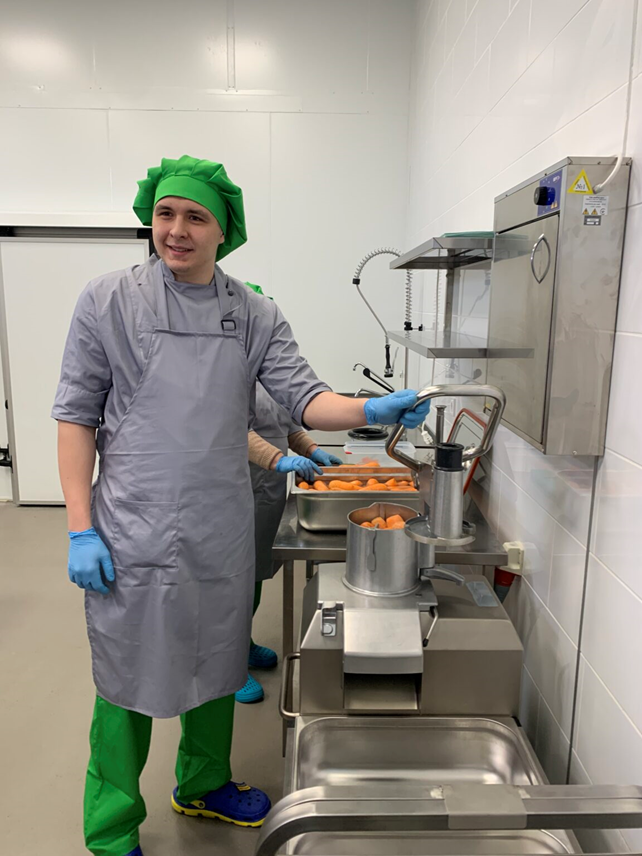
The government stresses that the model of kitchen factories has proved to be effective as it saves resources, ensures safe meals, and allows increasing the manufacturing without additional burden on local budgets. Each of recommended projects is to be approved by the EIB, which is a standard procedure that endures accountability, transparency, and compliance with international requirements.
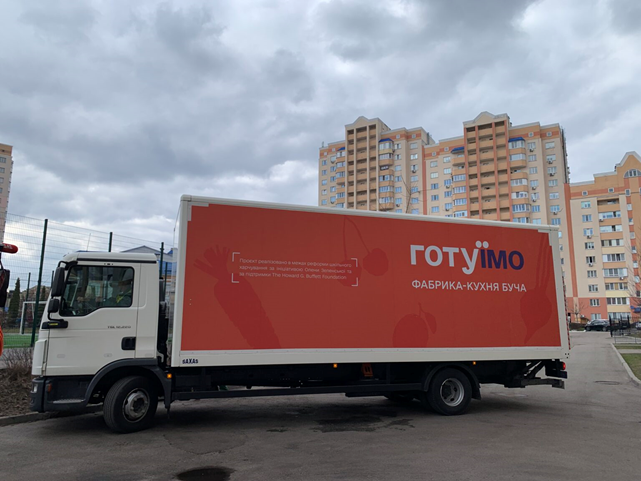
Efficiency of such infrastructure has been demonstrated by Bucha where the first kitchen factory opened in 2023 with the support of the Howard G. Buffett Foundation. It cooks close 7.5 thousand servings a day, applying the Cook&Chill technology that makes it possible to cut energy costs and keep up the meals’ quality.
Against the background of the ongoing reconstruction, the Interstate Consultants Engineers Guild (ICEG) emphasizes that it is significant to provide professional technical support to such projects, and engaging a consulting engineer enhances the capability of communities through clear work planning, technical solution monitoring, and risk mitigation in all stages of construction. It is professional management of complex infrastructure projects that become a warranty that recovery will be not only prompt but also quality, durable, and compliant with international standards.
Delivering the kitchen factory projects has been possible due to cooperation between the Ministry for Development of Communities and Territories, Ministry of Education and Science, Ministry of Health, and Ministry of Health other institutions. All phases are coordinated via the DREAM platform, which ensures digital control of planning, execution, and monitoring and also increases the communities’ ability to respond to wartime challenges.
